Biogeography and Adaptation Mechanisms in Prokaryotes Across Polar Biomes (POLAROMICS)
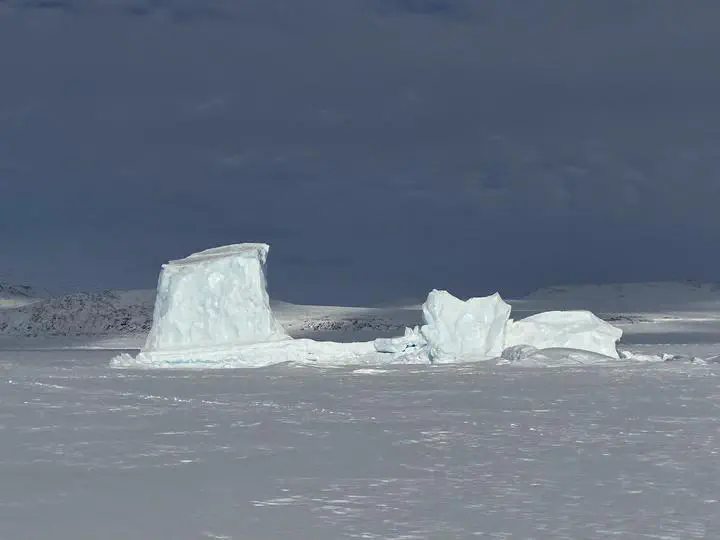 Photo by Pablo Sánchez
POLAROMICS is a multidisciplinary project integrating different areas of expertise in microbiology, ecology, genomics, bioinformatics, and evolution that share the same overall objective of understanding 1) the biogeographical patterns and ecological connectivity of microbiomes across different polar biomes, 2) the evolutionary diversification process and 3) survival strategies for the adaptation of polar microbes
The main goal of POLAROMICS is to understand the mechanisms governing the dispersion, ecological connectivity, diversification processes, and survival strategies for the adaptation of polar microbes. Despite the key importance of these processes, relatively little is known about how they operate in microbiomes across divergent polar biomes and their relevance for the resilience of polar ecosystems in the face of climate change. To accomplish its general aim, POLAROMICS pursues the following 4 specific Objectives:
- Objective 1: To test the prevalence of microbial biogeographical patterns across polar biomes and the identification of indicator species for each biome.
- Objective 2: To test the extent of ecological connectivity between different polar biomes, specifically between Arctic seawater-sea-ice; Antarctic surface vs. deep sea water, and Antarctic coastal-aquatic lagoons to determine the coexistence of species and the seed-bank persistence.
- Objective 3: To test the effect of the sea-ice-microbe concentration in brines as a source of evolutionary innovation through trans-domain-horizontal gene transfer between prokaryotes and viruses.
- Objective 4: To test the role of mixotrophy in polar microbiome adaptation: photoheterotrophy vs. other types of mixotrophy.

Silvia G. Acinas
Staff scientist
Pablo Sánchez
Staff scientist
Bioinformatician interested in genomics of marine prokaryotic communities